Friday, November 13, 2015

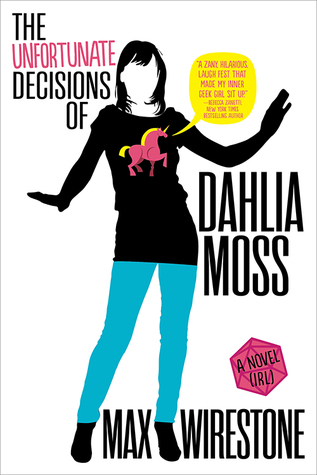
The Unfortunate Decisions of Dahlia Moss by Max Wirestone


Immediately, the author reveals her wit in this book. The first few pages where Dahlia describes her life are hilarious.

Here are a couple of my favorites:

 He said with a sparkle in his eye. The kind of sparkle you'd find on Santa's face. Or a mental patient's.
I don't mean that metaphorically - I fell off my chair. I didn't land on the floor because, legs - but to (be) perfectly clear: Ass left chair. 

This is not the type of book that I would usually read, but I'm glad I did!

Although I might not have been clued into some of the geeky humor in the book, it did not take away from the reading experience.

Also, with these types of stories, I am usually somewhat able to predict the outcome, and in this case, I was way off. (Yeah, I admit it.)

Also, I would like to note (mainly to the author, although I am not delusional and know that she will likely not see this) that I did, in fact, read the acknowledgements in their entirety, mainly out of pure curiousity and with no intent to plunder his fortune.

I really liked this book and would totally read another Dahlia story.

I received a copy of this book for free from the publishers via NetGalley in exchange for an honest review.


Thursday, November 12, 2015

The Panem Companion (The Hunger Games Companions) by V. Arrow


I must start this off by saying that I am a HUGE fan of all things Hunger Games! Yes the series and the movies (no criticism please!).

With the newest movie release coming up, I thought it the perfect time to refresh myself on all things Panem, especially since it's been a few years since I (binge) read the series. *cough: before I watched the first movie, when it was coming out on DVD cough*

When I first started reading this book, I was mainly picking up on all the differences between the books and the movies that I overlooked. However, this book brings up so many things that I didn't pick up on during my binge read of the series. 

This book digs in deep! It combc through Panem's structure, from its geography, socioeconomic system, race, gender, classism... It even looks at the actual odds that Peeta and Prim would be drawn for the reaping for the 74th Hunger Games! Then, subsequently explores family makeup and values in all of the districts and the Capitol. 

I am amazed at the depth that Susan Collins went in telling this story and the depths that the author had to dig to collect even the subtlest hints in each book. The book even examines the origin of each character's name! I had no idea of the references to Greek mythology and the Roman Empire conveyed throughout the Hunger Games trilogy. 

Usually, I would not have enjoyed, and truthfully, probably would not have even finished a book like this. However, my love of all things Hunger Games made this an exciting read! It made me want to read the series again, and I am curious how my new-found knowledge will change the reading experience. I know I will be looking much more closely at how the next movie includes many of the things I learned in this book. 

I received a copy of this book for free from the publishers via NetGalley in exchange for an honest review.


Tuesday, November 10, 2015

Gasa Gasa Girl Goes to Camp: A Nisei Youth Behind A World War II Fence by Lily Yuriko Nakai Havey, Cherstin Lyon


For those of us who were not born at the time of the bombing of Pearl Harbor, the Japanese, and the Asian people as a whole in the US, were treated like anyone that looked Arab was treated after 9/11. Gasa Gasa Girl goes to Camp is the story of one girl’s experience [n the Japanese camps after the bombing of Pearl Harbor. When her family first departed for the camp, Yuriko thought her family would go camping in the woods in a tent, just as the all-white Girl Scouts got to do every summer. The reality of the ugly, black buildings upon their arrival was a shock to the young girl. She thought the camping trip would be the beginning of a new relationship with her father, instead, he turned into an “elusive shadow” that summer, a stranger to his family.

Contains spoilers: 

Her family went from living in “Hollywood, a poor section, to be sure, but Hollywood,” to living “in a barrack at a racetrack.” Her father retreated into a bottle. The rest of the family “internalized the principles of gaman and shikatanagonai…teaming not to verbalize fears, frustration and conflict,” and gambano, meaning “take whatever life brings.”

“Stoic and principled Japanese were supposed to handle unbearable situations in this matter.” Her parents both had terrible childhoods and now their daughter was experiencing, not at the hands of her parents, “but at the hands of the government that promised them freedom and a better life.” Yuriko was terrified of even using the bathroom at night for the fear of being shot by American guards.
Yuriko did not identify with the Japanese that bombed Pearl Harbor. “The Japanese - these other war mongering Japanese – had deprived me of those things. However, I sensed that somehow OUR American government, MY American government was also responsible. It had made the decision to rip thousands of people from their homes and place them in isolated camps.

Yuriko spent three years in the camp, growing and maturing in them. When it was time to leave, she couldn’t remember much about “real life.” She wasn’t sure if it would be better than the camp and was unsure about the unfamiliar and unknown.

Lately, I have been reading a lot about the Holocaust and individuals’ experiences in the concentration camps. So, when I saw this book on NetGalley, it peaked my interests. I had not read any accounts of individual experiences in the Japanese camps and didn’t really know much about them or about how life was for Asians in American during the time after the Pearl Harbor bombing. This book opened my eyes to the similarities between how people reacted after 9/11 towards anyone that looked Arab or Muslim.


I just finished a Multicultural Diversity class, and many of the themes in this book fit along with things we addressed in class. In fact, I am going to suggest this book to my teacher. It gives you great insight into the life of Asians during that time, and I think it is important for people to read things like this. When individuals do something bad, it does not mean that their entire race is bad. This is something that speaks to our society today just as much as it did during Yuriko’s story.

I received a copy of this book for free from the publishers via NetGalley in exchange for an honest review.


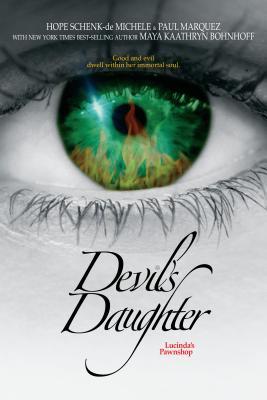
Devil's Daughter (Lucinda's Pawnshop #1) by Hope Schenk-de Michele, Paul Marquez, Maya Kaathryn Bohnhoff


Brittany Anders just made partner at DC & P, as "am associate with the firm for only two years, fresh out of law school." Just as she got promoted, she started dating a senior partner, named Aaron Price, who assured her that he "didn't work that way" and that him asking her out was not related to her new status at the firm. 

Upon learning of an unexpected "bump in the road," as Aaron called it, in her first big case as partner, Brittany took a walk to contemplate her options and stumbled upon Lucinda's Pawn Shop, which drew her in to look for something to commemorate her new found success. However, this book is much more about the Lucinda than it is Brittany.

Ok, so I'm actually a little conflicted as to how I feel about the way this book ended. Yes, I do want to read the sequel, and yes, I usually hate reading the first book in a series and not being able to immediately read the next one. I hate having to wait to see what happens, especially when the book ends with a nail biting cliff hanger. 

However, I found myself a little disappointed that this book did not have the dramatic ending that would have made me super upset that I would have to wait so long to see what happens next. Sp, I'm perplexed at my feelings... on one hand, I'm not so upset at how long I have to wait for the next installment. On the other hand, I feel that this book lacked the amazing, dramatic ending that it deserved.

Even if you haven't read this one yet, tell me what you think! Are you content reading the first book in a series and waiting a year or so for the next to come out? Or do you immediately open the next book in the series after finishing the first and get upset (and perhaps cry if the first book was that good) if it is not out yet?

I received a copy of this book for free from the publishers via NetGalley in exchange for an honest review.


Monday, November 9, 2015

Saturday, October 31, 2015

Tunnel, Smuggle, Collect: A Holocaust Boy by Jeffrey M. Ginghold


I’ve been reading a lot about the Holocaust lately, mostly accounts of individuals who witnessed the atrocities committed in concentration camps. However, until this book, I have not had the opportunity to read an account of an individual who witnessed life inside the Jewish ghettos during WWII.

WARNING: Contains Spoilers 

The braveness of the people that lived through these horrendous experiences never ceases to amaze me. At the beginning of this book, Leah gives birth to a baby boy inside of a city and a hospital that is being bombed, with walls crumbling down all around her. Merely a day later, she takes the long trek out of the city with thousands of other people, carrying the swaddled baby while having to run from ditch to ditch in order to avoid the German planes shooting into the masses of people fleeing the city.

Duvid led his wife, her brother and sister, his 6 year-old son and his 1 day-old baby out of their city, while it was being bombed, guiding the family to jump into ditches frequently to avoid the German planed that flew overhead, shooting into the thousands of civilians escaping the bombings, lasting throughout the day, until nightfall. Unfortunately, when the family made it to the Russian border, the Russians handed them over to the Germans, who returned them to the city after their death-defying escape.

Sam and his family were taken to the Warsaw ghettos, where they were forced to share a small apartment with 4 other families. His family of 4, along with Leah’s brother and sister, crowded into one bedroom. Leah and the baby slept on the only mattress, the rest of them “positioned themselves like a set of spoons all facing the same direction. One could only turn if they all turned together.” The family only had 2 blankets, one for the baby and the other had to be passed around and shared.

The family clung so hard to their Jewish heritage, which helped them see some good in everything bad that was happening to them. When another family moved into their already overcrowded apartment, a mohel was among them, which allowed the baby his bris ceremony and circumcision, even if it was a month late. The ceremony made everyone present happy, even those that were not a part of the family and had only met them upon arriving at the ghetto.

The bris was a ritual that affirmed the past, while facing the unknown. It was the only time Sam and his family would smile in the Warsaw ghetto and the last time they would be happy in Poland.


Unlike most others who gave up and died of starvation or waited in hopes that things might eventually get better, Duvid took his family’s future into his own hands. Although it meant teaching his young son to hide and guide his way through the dark and dangerous streets of the ghetto and its secret passages, Duvid would feed his family and find a way to escape from the Germans.

I especially admired Sam’s father, Duvid. Although the family went through a terrible experience, they were lucky in the sense that they were able to remain together during it, with Leah’s brother and sister able to stay with them until they successfully escaped the ghetto. 


I really enjoyed this book! It gave a unique perspective of the Jewish ghettos, while many books tell of experiences in the concentration camps or fighting in the war. I like being able to read many different experiences during that time. This account is well-written and keeps the reader engaged throughout the family’s long journey to safety and freedom. 

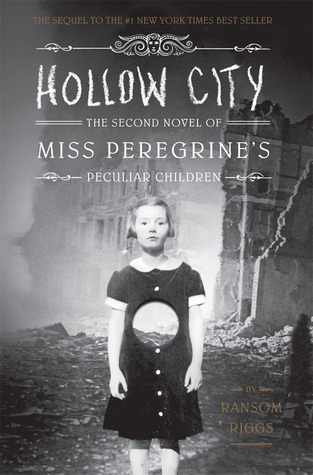
Hollow City (Miss Peregrine's Peculiar Children #2) by Ransom Riggs


Something that speaks to the quality of this series…I continued reading this book as soon as I finished the first book. I did not write a review for it and just kept reading. So, by the time I went back to write the reviews, I had to think a little about where the first book ended and where this one began.

Needless to say, so far, I am enjoying this series! Just like the first, this book captivated my attention. The only reason I did not continue on to the third book was that I had to place a hold for a digital copy from the library, and I do not have the funds to pay to read, right now. So I have to wait to read the third book, unfortunately. However, I hope that it does just as well as this and the first book in keeping me engaged and wondering what’s going to happen next.

Something I didn’t learn until after reading Miss Peregrine’s Home for Peculiar Children is that the author created the characters based on a pile of strange, old photographs: the ones seen in the book. The Kindle version of this book includes an interview with the author, who said for this sequel, he wrote the scenes, then found photos to include in the book to accompany them. Sometimes, he had to settle for an “almost perfect” photo and adjust the scene to better align with the photo. Riggs said that many of the scenes improved after rewriting them to better describe the photos.

This book was awesome, and I enjoyed it just as much as the first one! I can’t wait to read the third book in the series and hope it lives up to the first two!


Wednesday, October 28, 2015

From Stray Dog to World War I Hero by Grant Hayter-Menzies


*Warning: Contains Spoilers*

The beginning stated with the end. The book introduces a soldier at the time of his death and burial. It describes honors, unconditional loyalty and the praise received from the many people (and publications) that recognized his heroism while mourning him.


This soldier of the Great War was buried wearing marks of past glory, but no uniform, because this soldier was a dog, a mutt of indefinable ancestry. 

The book emphasizes that animals have no choice when it comes to war. However, that was not true for Rags. Despite his handlers tries to keep Rags from the front lines, where it was safer, Rags refused to leave his side. He saved many lives because of this.

It is the story of a dog rescued by a soldier who himself serves to rescue soldiers. Rags was found, a stray, roaming the streets of Paris in 1918. From there, he became a member of the First Infantry Division. The "scruffy, taffy colored terrier of about 25 pounds, with floppy ears, fluffy arching tail and perhaps more than a dollop of poodle in his blend" became a mascot to his division, and a legend to people all over the country.

Rags was not interested in learning tricks, he was a war hero for goodness sake. However, he did let his handler, Donovan, teach him one... Donovan taught Rags to stand on his back legs and raise his paw over his eye when he saw soldiers saluting. He remembered this "trick" long after the war was over, even after his best friend died.

Perhaps one of my favorite stories of Rags happened when he got separated from Donovan during the war. He stayed with the First Division men on their journey, though. He made friends with two men that were tasked with rising up into the air in a balloon in order to map out enemy locations. After giving him some food, Rags fell asleep in the balloon's basket. The men left Rags to rest while they worked, perhaps the quietest sleep he got during the war. However, later, someone started shooting at the cables that tethered the balloon to the ground, and the men could see a German plane flying low, coming straight toward them. The men put on their parachutes and jumped, one carrying Rags under his arm. The men reported that the German plane got close enough that they could see the pilot stick his head out of the cockpit in confusion. The men saw the pilot smile and wave, then fly away, apparently not wanting to kill the men and their dog.

Rags saved those men's lives, and he saved many more throughout the war. Unlike the purebred dogs that underwent intense training to deliver messages, Rags was a stray and learned from his handler (who had no training but loved animals) on the fly, during the war. Donovan was a communications specialist, and Rags learned to run ahead of him in order to find broken wires for Donovan to fix. He also learned to successfully relay messages, something that many of even the bravest and fastest dogs could not accomplish.

Possibly most important, Rags boosted the spirits of many men surrounded by war.Rags meant something special to everyone he came into contact with. Even late in his life, Rags did not belong to any one person or family, he belonged to the American people. 
The irony is that soldier dogs make war a little more human.  
I recommend this book for any animal lover. 

Disclaimer: Rags' story is very touching. May cause tears.

I received this book for free from the publisher via NetGalley in exchange for an honest review.